# Which rodent carries hantavirus? The long-tailed pygmy rice rat, reservoir of Andes virus
> The long-tailed pygmy rice rat (Oligoryzomys longicaudatus) is the rodent reservoir of Andes virus in Patagonia. Description, range, role in human transmission.
Published on May 12, 2026 on HantaTracker
Canonical source: https://hantatracker.fr/en/articles/andes-virus-rodent-reservoir/
Category: Understand
With the **MV Hondius** outbreak in May 2026, one question keeps coming back: **which rodent carries the hantavirus?** For the strain involved — **Andes virus** — the answer is one word: the **long-tailed pygmy rice rat**, known locally as **colilargo**. Here is its portrait, its habitat, and its exact role in the transmission chain.
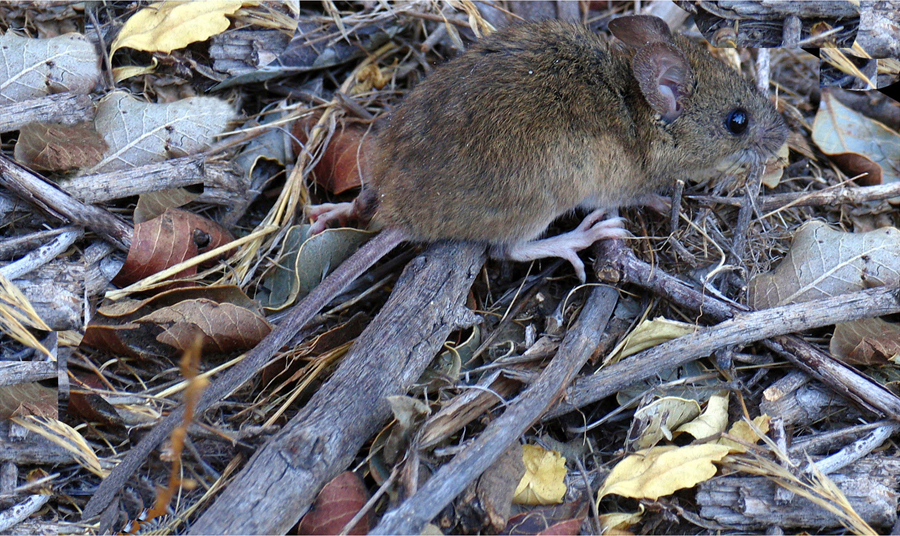
Colilargo (Oligoryzomys longicaudatus), the rodent reservoir of Andes virus in Patagonia. Photo: Yamil Hussein E., Wikimedia Commons, CC BY-SA 3.0.
## What exactly is a colilargo?
The **colilargo**, scientifically **_Oligoryzomys longicaudatus_** and also called **long-tailed pygmy rice rat** in English, is a small rodent of the family Cricetidae, genus *Oligoryzomys*. The Spanish name "colilargo" literally means "long tail". It is sometimes referred to as a "long-tailed rat", but the wording is misleading: **it is not a rat in the strict sense** of the genus *Rattus*.
### Physical description
- **Total length**: about 222 mm, including 127 mm for the tail alone
- **Weight**: 24 g on average — roughly the mass of an A4 sheet of paper
- **Coat**: buff-brown on the back with fine pale and dark lines, greyish-white belly
- **Tail**: very long (longer than the body), sparsely haired, dark on top and pale underneath
- **Ears**: small, almost hairless
The colilargo is much smaller than a brown rat (*Rattus norvegicus*, the common "sewer rat", which weighs 300 to 500 g). It looks more like a **long-tailed mouse**.
### Where does it live?
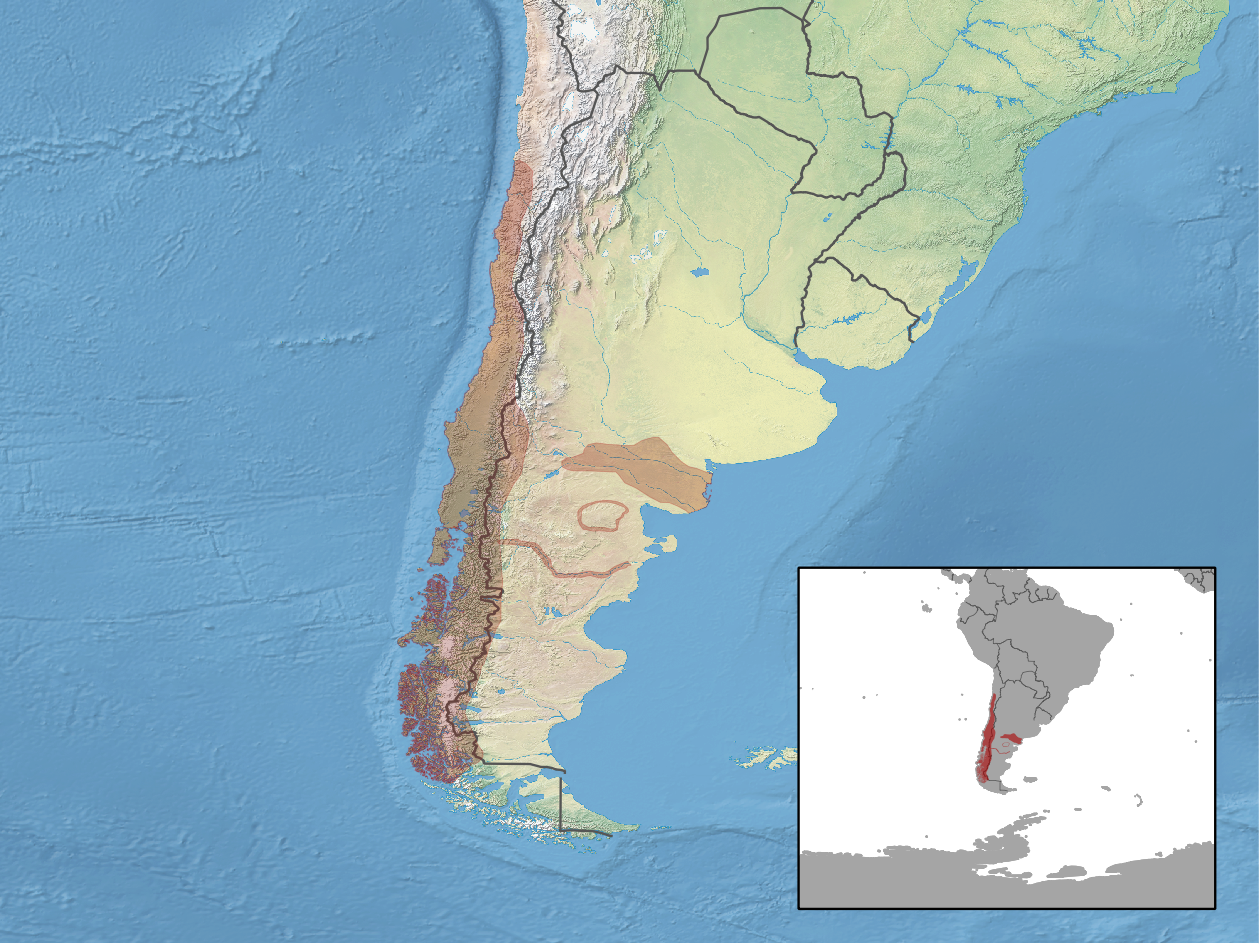
The colilargo is endemic to **southern South America**. Its range covers:
Geographic range of the colilargo in South America. Map: rbrausse, IUCN Red List + Natural Earth data, Wikimedia Commons, CC BY-SA 3.0.
- **Central and southern Chile**, from the northern Atacama to about 50° south latitude
- **Andean and Patagonian Argentina**, along the cordillera, with an outlying population in eastern Argentina
It is a forest species that thrives in undergrowth, forest edges, road verges and damp shrubby terrain. **It does not exist in Europe, North America or Africa**.
## Why is the colilargo the Andes virus reservoir?
### What is a "reservoir"?
A **natural reservoir** is an animal species in which a virus circulates chronically, generally without making the animal sick. The colilargo carries Andes virus (ANDV) permanently in some populations, without showing symptoms. The virus replicates in its tissues and is shed in its **urine, faeces and saliva**.
This asymptomatic infection lasts the rodent's entire life. It spreads between individuals through territorial fights (bites), mating and contact with the droppings of infected animals.
### Virus–rodent coevolution
Each hantavirus species is **strictly associated with one primary host species**. This specificity results from coevolution over millions of years. Andes virus has coevolved with the colilargo in the South American cordillera. That is why **it does not exist in Europe**: its host doesn't either.
## How the virus jumps from the colilargo to humans
The **main contamination routes** are:
1. **Inhalation of aerosols**: the dominant pathway. When droppings, urine or saliva dry and the dust is resuspended (by sweeping, draughts, cleaning of an unused cabin), viral particles can be inhaled.
2. **Direct contact**: bite, contact of a mucous membrane (eye, mouth) or skin lesion with an infected animal or its excretions.
3. **Ingestion**: food or water contaminated by droppings (minor route).
Hantaviruses are **not transmitted by insect bites** (mosquitoes, ticks) or by domestic animals (dogs, cats), which are not hosts.
### At-risk profiles
People most exposed in Patagonia are:
- **Farmers and forestry workers**
- **People cleaning long-unused cabins, barns or refuges**
- **Hikers and campers** in damp rural areas
- **Rural inhabitants** whose homes are poorly insulated against rodents
## Other rodent reservoirs of hantavirus worldwide
The colilargo is **one among more than fifty** rodent reservoirs of various hantavirus strains around the world. The main ones:
| Hantavirus strain | Rodent reservoir | Region | Human disease |
|---|---|---|---|
| **Andes** | Long-tailed pygmy rice rat (*Oligoryzomys longicaudatus*) | Patagonia (AR, CL) | Hantavirus pulmonary syndrome |
| **Sin Nombre** | Deer mouse (*Peromyscus maniculatus*) | North America | Hantavirus pulmonary syndrome |
| **Hantaan** | Striped field mouse (*Apodemus agrarius*) | East Asia | HFRS |
| **Seoul** | Brown rat (*Rattus norvegicus*) | Worldwide (urban) | HFRS |
| **Puumala** | Bank vole (*Myodes glareolus*) | Europe | Epidemic nephropathy |
| **Dobrava** | Yellow-necked mouse (*Apodemus flavicollis*) | Balkans | HFRS |
Each strain is **usually confined to the range of its host**. That is one of the reasons why Andes virus does not establish itself spontaneously outside Patagonia.
## The "ratada": when the colilargos boom
About every **seven to ten years**, a particular ecological event hits Patagonia: the **synchronised, massive flowering of native bamboo** (*Chusquea spp.*). The bamboo flowers en masse, produces phenomenal amounts of seed, then dies. For colilargos, that is an all-you-can-eat buffet.
Colilargo populations can then **increase tenfold or fiftyfold** within a few months. This phenomenon, known in Spanish as **"ratada"**, mechanically increases the probability of human contact with infected rodents. Historically, **human hantavirus outbreaks often coincide with ratada years**.
The landmark event: in 1990, over one million hectares of bamboo flowered simultaneously in southern Chile, followed by a population explosion of colilargos and the first identification of Andes virus in humans in 1995.
## The colilargo and the MV Hondius outbreak (2026)
The **MV Hondius** departed from **Ushuaia**, in Argentine Tierra del Fuego, on 1 April 2026. Ushuaia is within the natural range of the colilargo. Argentine authorities, in coordination with the WHO, are still investigating where exactly the **index case** — a Dutch passenger — could have been exposed to the virus before boarding.
The hypotheses under examination point to an **environmental exposure** at a tourist site in Tierra del Fuego, but no confirmation is public so far. The virus itself has been identified as a strain **genetically very close to the Epuyén outbreak of 2018-2019**, without unusual mutation according to the Swiss sequencing published in May 2026.
## Key takeaways
- The reservoir of **Andes virus** is the **colilargo** (*Oligoryzomys longicaudatus*), a small Patagonian rodent of 24 g.
- It **does not live in Europe**, making spontaneous environmental circulation of Andes virus outside South America very unlikely.
- Human contamination occurs mainly through **inhalation of aerosols** in rural and forest Patagonian areas.
- The WHO assesses the **risk to the general population as low**, including in the context of the MV Hondius outbreak.
- In France, the hantavirus reservoir is the **bank vole** (Puumala virus), causing a significantly less severe form.
To understand the wider response to the 2026 outbreak, see our article on the [MV Hondius hantavirus outbreak](/en/) and the [prevention page](/en/prevention/).